

Your domain expert stayed quiet the entire session. So did the engineers who actually knew the codebase. A decision was made, maybe yours. Everyone nodded. You took the silence as agreement. Weeks later, it quietly falls apart.
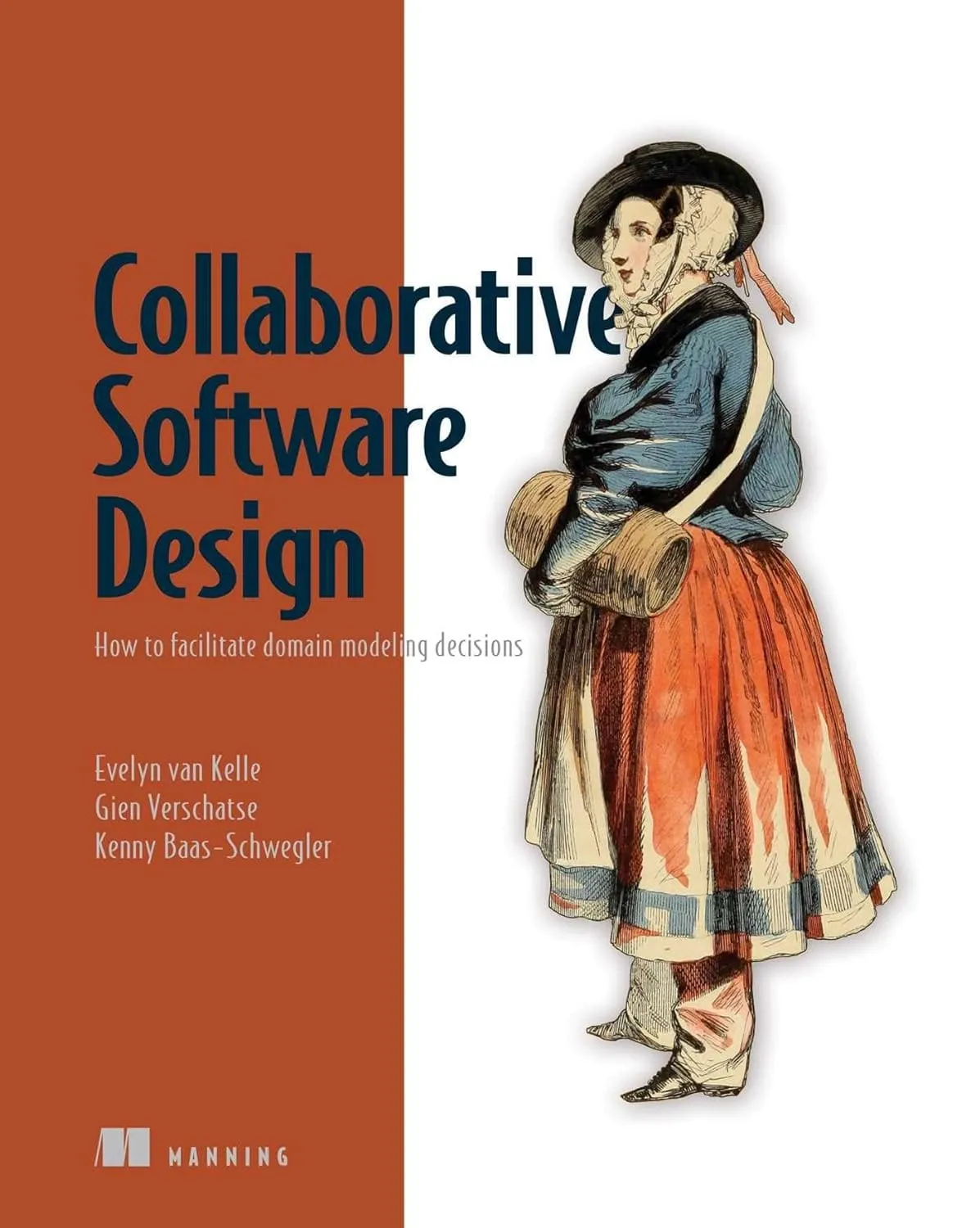
This training tackles that. Based on the book Collaborative Software Design by Evelyn van Kelle, Gien Verschatse, and Kenny Baas-Schwegler, it teaches you the facilitation discipline to make the invisible dynamics in the room visible, and to turn them into better decisions.
This isn’t a tools problem. EventStorming, Domain Storytelling, Wardley Mapping, they all do their job. The problem is what happens between the people holding the markers.
About the workshop

This is an immersive, hands-on two-day workshop. You will not just listen to theory; you will practice the moments that make or break a design session — in a safe space, with real feedback.
Effective software design hinges on strong collaboration. But let’s be honest: collaboration is messy. Misunderstandings, hidden assumptions, and social dynamics often undermine even the best technical plans. Collaboration is not innate; it is a discipline.
The dynamics that get in the way are more predictable than you might think. The book identifies three forces that quietly shape every design session:
Ranking shapes who speaks and who doesn’t. It’s not always about job titles — it’s about who spoke first, who has the most visible expertise, who the room has learned to defer to. Most of it is unconscious. If you’re the quieter voice in the room, ranking is probably why your ideas stay unspoken. If you’re the louder one, ranking is probably why you stopped hearing the pushback you need.
Cognitive bias shapes what the room considers. Anchoring locks the conversation to the first idea raised. Confirmation bias fills the session with evidence that supports what people already believe. Functional fixedness stops the group from seeing beyond how things currently work. None of this is deliberate. All of it affects the architecture.
Resistance gets treated as a problem to overcome — when it’s actually the most valuable signal in the room. When someone says “that won’t work,” they’re surfacing a constraint, a risk, or a piece of context that no one else has. Dismissing it doesn’t make it disappear. It just moves it to a Slack message two weeks later.
This workshop is designed to make these dynamics visible and navigable. You will learn to read what’s actually happening in the room — and to use it, rather than fight it.
What you will learn
-
Why collaborative design fails — and what actually fixes it: Involving stakeholders early isn’t just “nice to have.” We explore the concrete risks of siloed design, and why the gap between Business and IT widens when those risks go unaddressed.
-
The facilitator’s stance — holding the room without dominating it: You don’t have to be an extrovert to facilitate. Learn the difference between participating in a design and guiding it. This is a skill, not a personality trait — and it is the foundation everything else is built on.
-
How ranking silences the people who know the most — and isolates the people at the top: Power dynamics exist in every room — conscious and unconscious. Ranking doesn’t just stop good ideas from being raised. It also stops the people with the authority to act on them from hearing honest feedback. You will learn to recognise how this plays out, and practice techniques so your decisions are built on what’s actually true in the room — not just what feels safe to say.
-
Reading what isn’t being said: Silence is information. Disengagement is data. Learn to observe the signals the room is already sending — and use them to steer the conversation before it goes off track.
-
Surfacing knowledge that stakeholders struggle to articulate: Move beyond standard questions. Practice Socratic questioning and “Crucial Conversations” techniques to uncover deep domain knowledge — especially the kind that stays hidden when ranking makes it feel unsafe to share.
-
Keeping the group aligned when things get stuck: Learn the practical utility of check-ins, check-outs, and structured pauses. More importantly, learn how to restore flow when discussions fragment — because they will.
-
Using resistance instead of fighting it: Resistance isn’t always bad; often, it’s the most important signal in the room. You will develop the confidence to address it head-on — using it to clarify constraints and reach shared understanding, rather than letting it become a blocker.
-
Making decisions that actually stick: The real test isn’t what’s decided in the session. It’s whether it holds. Learn how to converge the group’s collective knowledge into concrete decisions with genuine buy-in — and how to communicate them so the commitment survives the meeting.

Before the workshop
To get the most value from these two days, some prior exposure to collaborative modeling (like EventStorming or Domain Storytelling) is helpful, though not strictly required. We will provide introductory materials before the workshop begins to ensure everyone starts on the same page.
If you want to dive deeper beforehand, our book Collaborative Software Design is the perfect companion, but it is not a prerequisite to attend.
Tech Stack (Online Editions) This workshop is highly interactive. We use Miro as our digital canvas. If you are new to Miro, we strongly recommend spending 15 minutes on the Miro Academy: Participant Onboarding Course prior to the session. Familiarity with the tool will allow you to focus entirely on the facilitation dynamics rather than the interface.
Audience
This workshop is designed for technical leaders who want to move beyond “running meetings” to effectively facilitating shared understanding. It is ideal for:
-
Software, Solution, & Domain Architects
-
Tech Leads, Staff+ Engineers, and Senior Developers
-
Product Managers & Product Owners
-
Business Analysts & QA Professionals
-
Engineering Managers & Scrum Masters
If you are responsible for bridging the gap between business requirements and technical implementation, this workshop is for you.
Agenda
Day 1: The Human Side of Modeling
We start by diving straight into a large-group collaborative modeling session. This isn’t a lecture — it is a safe space to practice facilitation in real-time, with coaching and feedback. We will focus on the “invisible” dynamics that govern the room:
-
Facilitation Mechanics: Practical techniques to guide the group without dictating the outcome. The difference between holding the space and filling it.
-
Ranking Theory: Recognising how power and hierarchy — both conscious and unconscious — influence who speaks, who stays silent, and whose ideas get adopted. And what to do about it.
-
Observation: Moving beyond “listening” to observing behavior, energy, and silence — and using what you see to assess the health of the group dynamic in real time.
-
Active Listening: Practicing communication techniques that lower defenses and surface the complex domain knowledge that people are hesitant to share.
Day 2: From Conflict to Decision
On the second day, we tackle a specific design challenge using your preferred collaborative modeling tool. The focus shifts from reading the room to driving outcomes:
-
Sense-Making: How to use check-ins, check-outs, and structured pauses to keep the group aligned — and how to recover when the conversation loses its thread.
-
Navigating Resistance: Strategies to handle conflict constructively. Learn to view resistance not as a blocker, but as valuable data — and use it to surface constraints and build shared understanding.
-
Sustainable Decisions: How to close the loop. Moving from sticky notes and discussions to concrete, supported design decisions — and communicating them in ways that make the commitment stick beyond the meeting.

